5 Grout Cleaning Myths Costing Your Facility Thousands (And What Actually Works)
Armchem Store
If your grout looks dirty again two weeks after cleaning, you’re not alone and you’re probably making one of these five costly mistakes.
Walk through any commercial facility and you’ll notice something: the grout lines. Whether they’re pristine or embarrassingly dingy, they tell a story about the building’s maintenance standards. For facility managers, property owners, and cleaning professionals, keeping grout clean isn’t just about aesthetics. It’s about protecting a significant investment, maintaining health standards, and avoiding the expensive proposition of complete tile replacement.
The challenge? Grout is uniquely difficult to clean. Its porous nature means it absorbs everything it touches, from spilled coffee to tracked-in dirt to cleaning solutions themselves. This creates a perfect storm where conventional wisdom often makes the problem worse, not better.
By the end of this article, you’ll know exactly why your current approach isn’t working and what to do instead. More importantly, you’ll understand the science behind effective grout cleaning so you can make informed decisions that save both time and money.
Myth #1: Bleach is the Best Grout Cleaner
Why people believe this: Bleach has powerful brand recognition as the ultimate disinfectant and stain remover. It’s readily available, inexpensive, and creates the immediate visual impression that it’s working when you see those white suds foaming on dirty surfaces.
The truth:
Bleach is one of the worst things you can use on grout, especially in commercial settings where you’re dealing with high traffic and regular maintenance schedules.
First, bleach doesn’t actually clean in the traditional sense. It whitens by breaking down color molecules, which can make stains appear lighter temporarily, but it doesn’t remove the underlying soil. This means dirt remains embedded in the grout’s porous structure, ready to attract more grime.
Second, bleach chemically degrades grout over time. The alkalinity (typically pH 12-13) breaks down the cement binder in grout, making it increasingly porous and prone to cracking. What starts as a cleaning solution becomes a demolition agent with repeated use.
Third, bleach reacts with many common soils to create yellowing. If your grout has turned an unpleasant yellow-brown despite regular bleach treatments, this chemical reaction is likely the culprit.
Myth #2: More Product = Better Results
The logic trap: It’s human nature to think that if a little product works well, more will work even better. When faced with stubborn stains, many cleaning professionals instinctively reach for the concentrated formula or apply multiple rounds without proper rinsing.
Why it backfires: Using too much cleaning product creates residue buildup that actually attracts more dirt. Here’s what happens at the molecular level: When cleaning solution isn’t properly diluted or thoroughly rinsed, it leaves behind a tacky film on the grout surface. This film acts like flypaper, grabbing onto soil particles that would otherwise be easily removed during regular cleaning.
The science: Most grout cleaners contain surfactants, which are molecules with one water-loving end and one dirt-loving end. At proper concentrations, they do their job efficiently, surrounding soil particles and allowing them to be rinsed away. However, excess surfactants have nowhere to go. They remain on the surface, creating what’s essentially a soap film that’s sticky to the touch (even if you can’t feel it) and magnetic to incoming dirt.
This creates a vicious cycle: The grout appears dirty faster, prompting more aggressive cleaning with more product, which leaves more residue, which attracts more dirt. Within months, you’re cleaning twice as often and achieving worse results.
Myth #3: All Grout Cleaners Are the Same
Walk down the cleaning supply aisle and you’ll find dozens of products claiming to clean grout. The assumption that they’re interchangeable is not just wrong, it’s potentially destructive.
Different types: Grout cleaners generally fall into three categories based on pH:
Acidic cleaners (pH below 7) are designed to remove mineral deposits, rust stains, and hard water buildup. They work by chemically dissolving alkaline deposits. However, they can etch certain tile types and weaken grout with repeated use.
Alkaline cleaners (pH above 7) excel at breaking down organic matter, oils, and greasy soils. Most commercial applications require alkaline cleaners because of the nature of the soil encountered. However, highly alkaline products (pH above 11) can damage grout’s cement binder over time.
pH-neutral cleaners (pH around 7) are the safest for regular maintenance but may lack the power for heavy soil loads or specific stain types.
pH levels and when to use each: Understanding your soil type is critical. A healthcare facility dealing with bodily fluids and organic matter needs a different approach than a manufacturing plant combating oil and industrial grime, which differs again from a retail space managing tracked-in dirt.
Using an acidic cleaner on grout stained with oil-based soil will accomplish nothing, the chemistry simply doesn’t match the problem. Conversely, attacking hard water staining with an alkaline cleaner is equally futile.
Why wrong pH equals permanent damage: Perhaps most concerning is when people use highly acidic products (pH 1-3) attempting to “blast away” stubborn stains. These aggressive cleaners can cause irreversible etching on tile surfaces and rapidly degrade grout structure. One application might seem fine, but the cumulative effect of incorrect pH levels accelerates deterioration that would otherwise take decades.
Industry standard: For most commercial applications involving general soil and organic matter, professional cleaners recommend products in the pH 7-10 range. This provides effective cleaning power while maintaining the long-term integrity of both grout and tile.
Myth #4: Steam Cleaning is Sufficient
Steam cleaning has gained popularity as a “green” solution that sanitizes without chemicals. The technology certainly has its place, but viewing it as a complete grout cleaning solution reveals a fundamental misunderstanding of how cleaning actually works.
When steam works: For light maintenance cleaning and sanitizing, steam can be excellent. The high temperature kills bacteria and can loosen surface-level dirt. In applications where soil hasn’t had time to penetrate deeply and where the primary concern is sanitation rather than appearance, steam cleaning can be part of an effective maintenance program.
When steam fails: Steam is simply hot water vapor. It has no chemical action to break down oils, no surfactants to lift embedded soil, and no chelating agents to remove mineral deposits. When faced with oil-based soils (common in food service), deeply embedded dirt (inevitable in high-traffic areas), or staining that has penetrated the grout’s porous structure, steam alone cannot deliver results.
The heat may soften some surface soils, making them easier to wipe away, but this doesn’t address the underlying contamination. Many facility managers have discovered this limitation the hard way: grout that looks slightly better immediately after steam cleaning but returns to its dingy appearance within days.
Why combination approach is best: Steam cleaning can be a valuable tool when used correctly—as a follow-up sanitizing step after chemical cleaning or as a regular maintenance practice between deeper cleanings. The mistake is treating it as a replacement for proper chemistry.
Myth #5: Professional Cleaning is Too Expensive
When facility managers calculate cleaning budgets, professional-grade products or services often seem prohibitively expensive compared to picking up generic cleaners at a big-box store. However, this comparison fails to account for the full cost picture.
Cost breakdown: A gallon of commercial-grade grout cleaner might cost $35, while a generic tile and grout cleaner costs $8. On the surface, the generic product seems like the smart financial choice. However, when you factor in dilution ratios, coverage rates, and frequency of application, the numbers shift dramatically.
Professional-grade products typically concentrate more effectively and clean more thoroughly, meaning you need less product and less frequent applications. That $35 gallon might dilute to make 32 gallons of working solution that truly cleans, while the $8 bottle used at full strength gives you only the one quart and requires twice-weekly application to maintain appearance.
Hidden costs: The real expenses hide in the areas most budgets don’t itemize clearly:
Labor time: How many hours do your staff spend cleaning and re-cleaning grout that never looks quite right? At $20-30 per hour for commercial cleaning labor, inefficient products waste thousands annually in a medium-sized facility.
Damaged grout: Using improper cleaning methods accelerates grout deterioration. Replacing deteriorated grout costs $8-15 per square foot professionally, while complete tile replacement can exceed $20 per square foot. An ounce of prevention truly equals a pound of cure here.
Re-cleaning cycles: Poor-quality cleaners that leave residue require more frequent cleaning, compounding both product and labor costs indefinitely.
A product worth considering:
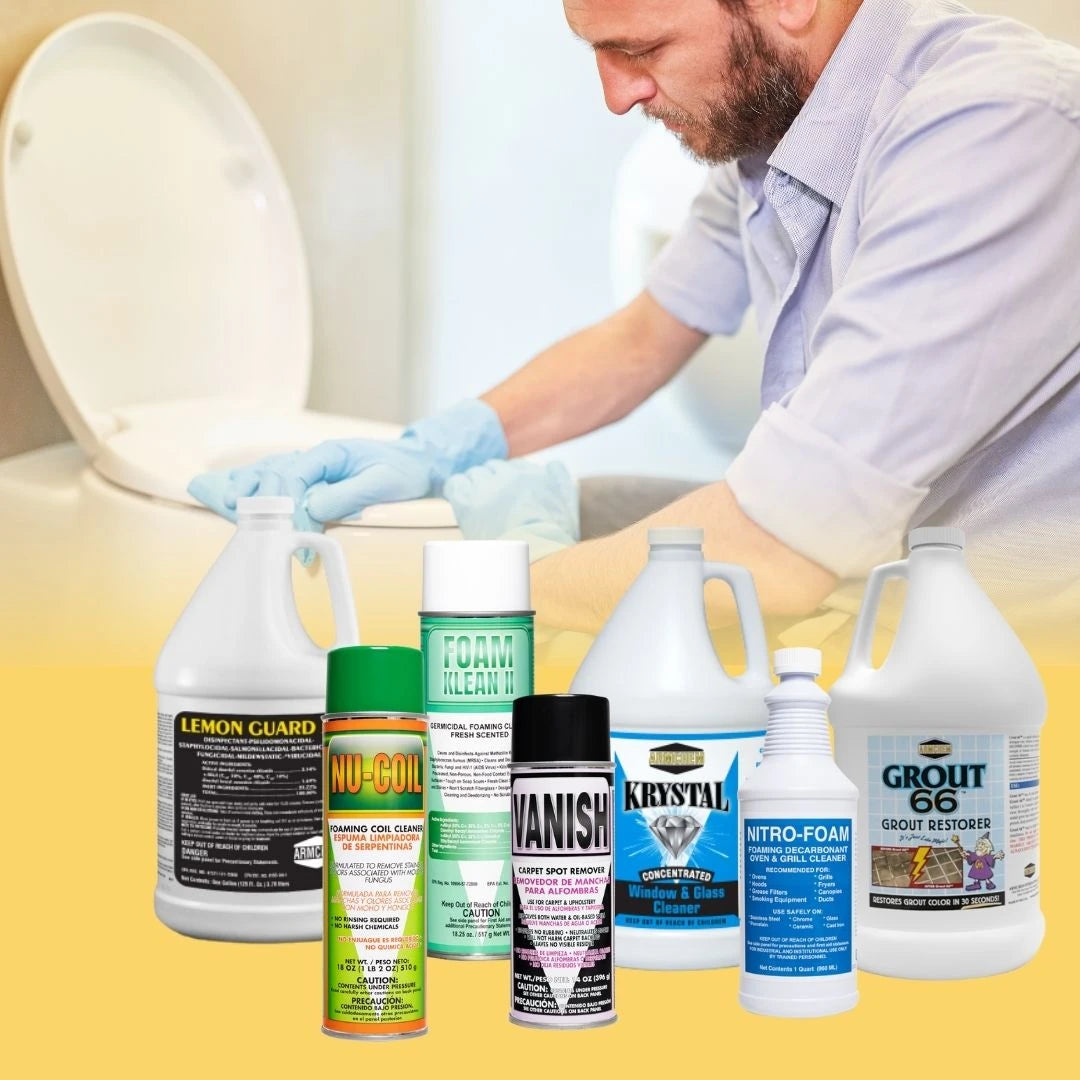
Grout66 represents a newer generation of grout cleaners designed around these principles. Formulated at pH 9.5, it provides strong cleaning action on typical commercial soils while remaining gentle on grout structure. The low-residue formula means cleaned areas stay cleaner longer, reducing the cleaning frequency that drives up labor costs.
Stop Throwing Money at Myths
The five myths we’ve examined, believing that bleach is best, assuming more product means better cleaning, thinking all cleaners are interchangeable, relying solely on steam, and dismissing professional solutions as too expensive, collectively cost commercial facilities thousands of dollars annually in wasted product, excessive labor, and accelerated grout deterioration.
The solution isn’t complicated: use pH-balanced, low-residue cleaners designed specifically for grout, apply them according to manufacturer guidelines, and maintain a consistent schedule that prevents soil from becoming embedded. This approach costs less in both the short and long term while delivering dramatically better results.
Ready to test your current approach? Pour a small amount of your current grout cleaner on a clean surface and let it dry. If it leaves a visible or tacky residue, you’ve found your problem. That film is why your grout never stays clean.
For facility managers ready to move past these costly myths, Grout66 offers a science-based alternative proven in thousands of commercial applications. Explore how pH-balanced chemistry and low-residue formulation can transform your grout maintenance program at armchem.com.
Your grout doesn’t have to be a constant headache or a budget drain. With the right approach, it can be one less thing to worry about.